

Here Comes the Sun
I've moved from one Bay to another and here's what I see...

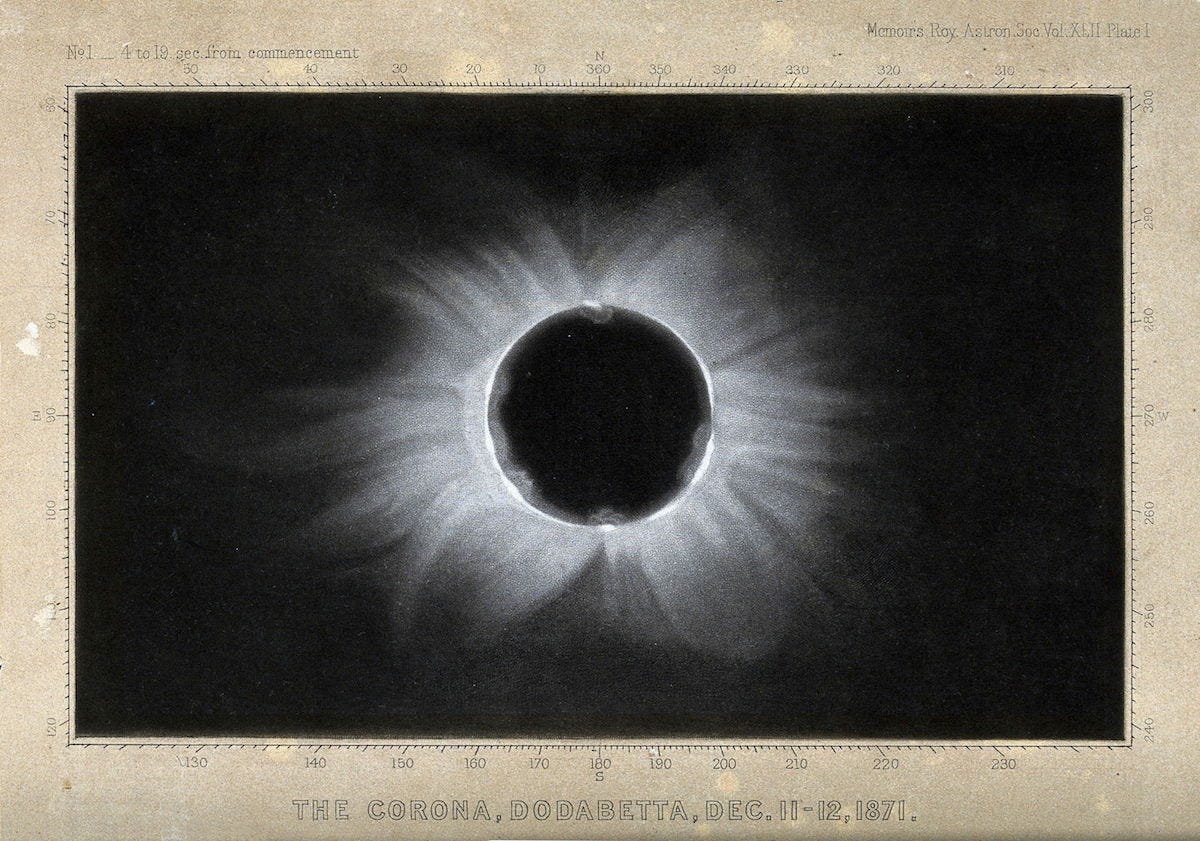
This was the universe about which we have read so much and never before felt: the universe as a clockwork of loose spheres flung at stupefying, unauthorized speeds.
- Annie Dillard from Teaching a Stone to Talk
In 2023, we made the decision to move our family from Miami to the San Francisco Bay Area. This did not come lightly. I was leaving behind siblings, parents, a community of friends and artists — and also Islandia Journal, the nonprofit literary magazine I founded in 2021. Issue 12 is in print and for sale now ;)
It would be a lie if I said I didn’t try and stay. I’d made the case that since hurricanes and sea level rise at least provided their targets (us) with more lead time to prepare, they would be more sufferable climactic conditions than sudden earthquakes and wildfires — but my fate was sealed.
I would be leaving a Miami which, but for its limestone ridge, towering skyline, and expansive undersea world, is a flat place. Miami’s porous limestone bedrock and Florida’s sunshine laws make it so no detail of the place is truly hidden. Miami also now has the most social media influencers per capita in the US. Everything is officially surfaced.
The Bay Area is Not Flat, It Turns Out
Since the fall of 2023, I’ve been orienting myself to a new landscape. I’ve learned of microclimates, atmospheric rivers, hills, and different types of bedrock. Instead of seeking Biscayne Bay to know where east is, I now seek the amorphous blob-like San Francisco Bay for the west. Instead of seeking the rising sun over the Atlantic, I gaze upon the silhouetted Berkeley hills imagining what dawn looked like in Miami.
For a while, I felt uninspired. It was Miami and Florida on which I’d formed a deep philosophy of place manifest in curated collections, essays about subcultures, and archival revelations.
Now, though, I see there is more.
After a month of Tule fog and another week of cold, dull rain (no thunder or lightning in the the Bay Area), I saw the sun emerge again and knew who I was.
Enter Sunkeeper
I’ve redesigned this dormant page as Sunkeeper with the hope of sharing my now transcontinental perspective. In Sunkeeper, you can expect essays which feature archival findings, hidden histories, and literature to contextualize places and time — so that I also might orient myself with irreverence for your reading pleasure. My views have been informed by change. I’m now a parent of three boys and work for an environmental nonprofit in a strange rural county.
For my first Sunkeeper, I’ve decided to share one way in which I’ve sought to shed light on this place: reading.
Six Bay Area Books to Give a Flatlander Solid Footing
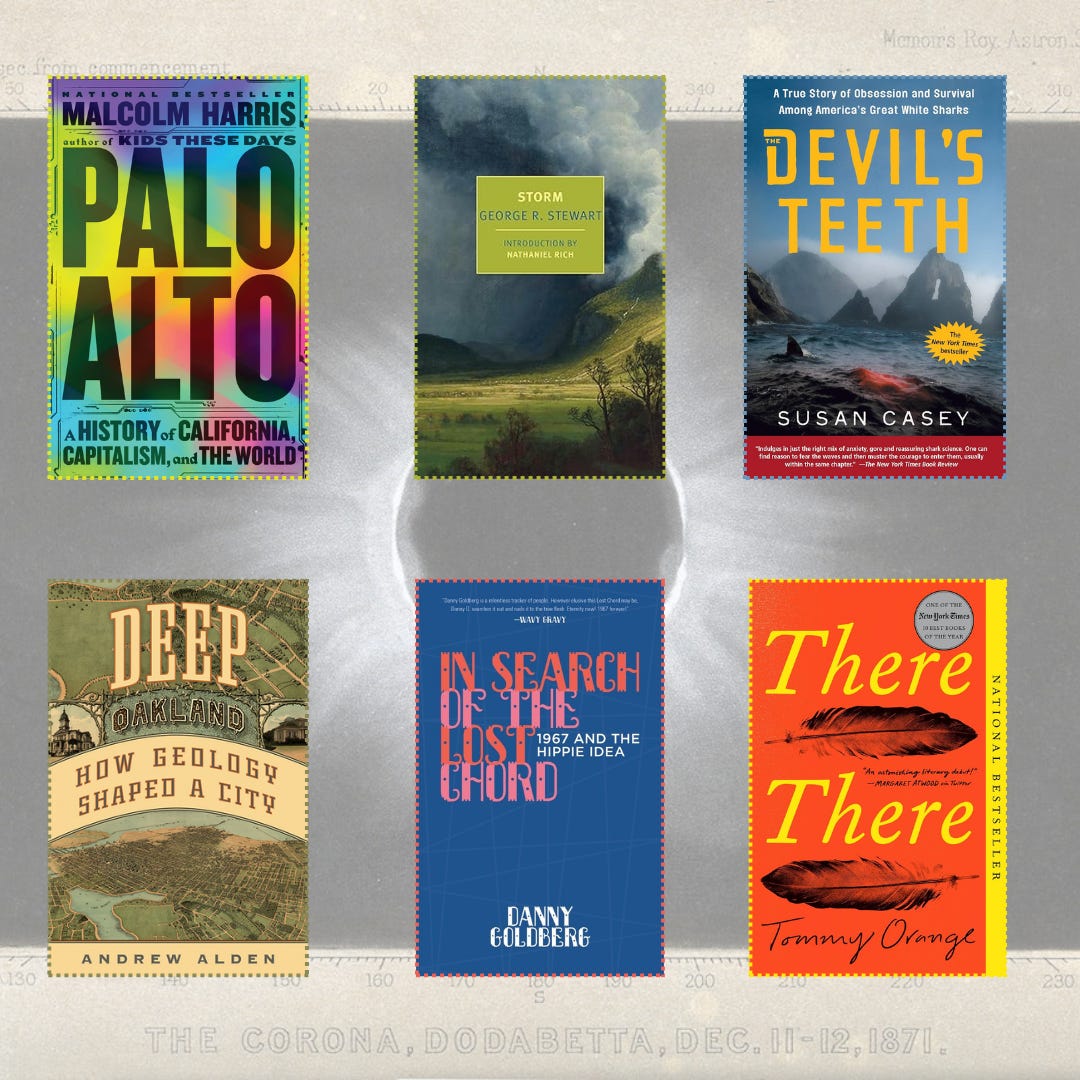
Palo Alto: A History of California, Capitalism, and the World
By Malcolm Harris
Little, Brown and Company, 2023. 720 pages.
This book took me longer to read than it took my wife to give birth to two children. I was tired, ok? Like a full two years of the most densely packed history about the South Bay, Stanford, and their contributions to tech and the military industrial complex — and now the ways in which their interconnectedness are pretty much ruining our lives :) How do we imagine a reckoning with the environmental and cultural catastrophe which “The Palo Alto System” has wrought? “One way to do it,” Harris writes, “Is to imagine we just haven’t reached the consequences yet, that this is all rising action that will culminate in a downfall when Silicon Valley finally goes too far.” I’m patient.
It seems every new friend I make out here is in tech and/or working directly on AI. It’s understandable. The Bay Area is an incredibly expensive place to live and many entered tech as creatives. They had to pivot with the times. That being said, I’m not really into the AI! In the first year of taking Anthropic’s dollars, the California Academy of Sciences announced the death of the most famous Floridian in the State of California: Claude the Albino Alligator.
cOiNciDEnce?!
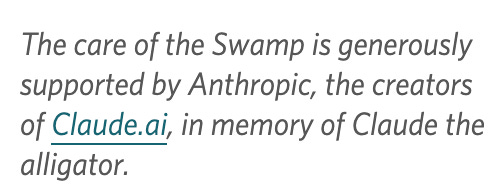
On our first trip to “Museo ABC” (as my oldest calls it) since Claude’s passing, I told him that Claude was dead.
“How does that make you feel?” I asked.
“Happy,” he said.
I experienced a jolt of fear that I was raising a psychopath.
“Why happy?” I asked.
“I’ll still be able to imagine him forever.”
I won’t forget either, bud…
Storm
By George R. Stewart
New York Review of Books, 2021. 304 pages.
Miami thunderstorms come in quick and strong. Aguaceros. Thunder, lightning, and swamped sewer drains. Abruptly, they leave. The atmospheric rivers in the Bay last for days and weeks and are defined by the constant gentle thrum of chubby drops. Eventually, dams overflow. Reading Stewart’s Storm prepared me for this reality.
I’d first learned about the writer while hiking one of Berkeley’s many secret staircases. In my favorite book, Secret Stairs: East Bay, writer Charles Fleming points out 2706 Virginia Street. Its past residents included Dorothea Lange and yes… George R. Stewart. Lore states that Stewart wrote Storm while living there and working as a UC Berkeley professor.
The place of man’s birth is unknown; but in poetic dreams (as if dimly remembering) man yearns back toward some land benign and equable, far from the path of storms.
This book is the single great weather book I’ve read. The banalities and obsessions of a meteorological forecasting officers and the high stakes nature of plowing Donner Pass and working as a lineman are relics from a bygone era which, absent an overarching plot, help drive the tension of Storm’s narrative forward. A must read.
Devil’s Teeth
By Susan Casey
Henry Holt & Co., 2006. 304 pages.
After moving here, too often I’d hear somebody mutter under their breath, “Oh, look, you can see the Farallons from here.” It’s only when I read Susan Casey’s epic portrait of these islands—home to the largest Great White Sharks in the world—that I learned, despite being 28 miles offshore, the islands are technically part of the City of San Francisco. The water in the Bay Area is cold, yes, but if the sun is out, I like to soak. The only thing keeping me from doing that? Great White Sharks. Too many Augusts glued to Shark Week for this guy. Devil’s Teeth helped me identify where they hang out and what their habits are. It also put me on to the incredible history of these remote islands.
Deep Oakland: How Geology Shaped a City
By Andrew Alden
Heyday Books, 2023. 256 pages.
Reading Deep Oakland, the geology of the East Bay unfolded before my eyes. I began to notice the volcanic architecture of its upper reaches and the abandoned relics of rampant mining and logging. While we searched for the right place to live, I began to consider the nooks and crannies along creeks where evidence of Ohlone occupation transcended earthquakes and fires. I drive past Lake Merritt now and can imagine all that was paved over. Now I know what kind of rock I’m on top of when an earthquake hits and whether or not it’s liable to give way. Alden’s blog, Oakland Underfoot, trained me to always look down on the sidewalk for stamps to know a place’s history.
In Search of the Lost Chord: 1967 and the Hippie Idea
By Danny Goldberg
Akashic Books, 2017. 340 pages.
In this researched, personal history of leftist and underground political movements during the late 60s, Goldberg recalls how Stokely Carmichael coined the phrase, “Hell No, We Won’t Go!” during a protest at UC Berkeley. It seems many of the young hippies took this to heart and laid down roots in the area where I now live. Thanks to California’s Prop 13, these now aged hippies live in homes assessed in the millions but pay very little in property taxes. I sometimes encounter them in the halls of Monterrey Market. Do they move out of the way for toddlers and babies? Hell no, they won’t go!
There There
By Tommy Orange
This book was a Pulitzer finalist in 2010 and for good reason. Interwoven “urban Indian” narratives collide during a pow wow at the Oakland Coliseum. The Bay Area native activist histories which are canon now—like the occupation of Alcatraz—have served as a bedrock for understanding the ongoing dispossession of the Bay Area. Orange writes, “Buried ancestral land, glass and concrete and wire and steel, unreturnable covered memory. There is no there there.” Though this sentiment is specific to the Native experience, its universality to those of us who struggle with identity and exile is what makes this book so special and personal. Orange writes, “We came to know the downtown Oakland skyline better than we did any sacred mountain range, the redwoods in the Oakland hills better than any other deep wild forest.” There is a lack of sentimentality and sadness embedded in this line but also an eye towards progress and new beginnings.
The Sun Will Rise Again
I take no solace in acknowledging that three out of these six books clock in at 304 pages… just short of the 305 which I love so much. In 2017, leaving Miami ahead of Hurricane Irma, Nina turned to me and said, “Well, I guess you can’t say ‘305 Till I Die’ anymore.” It was a dagger to my heart. Here and now I can say that I’ll always sing Miami no matter where I am.
Stay tuned…
Well this is good to see.. Glad that the San Franciscans are getting a little dose of some of the best that its sister state has to offer. I'm sure they need it (who wouldn't?). Onward.....